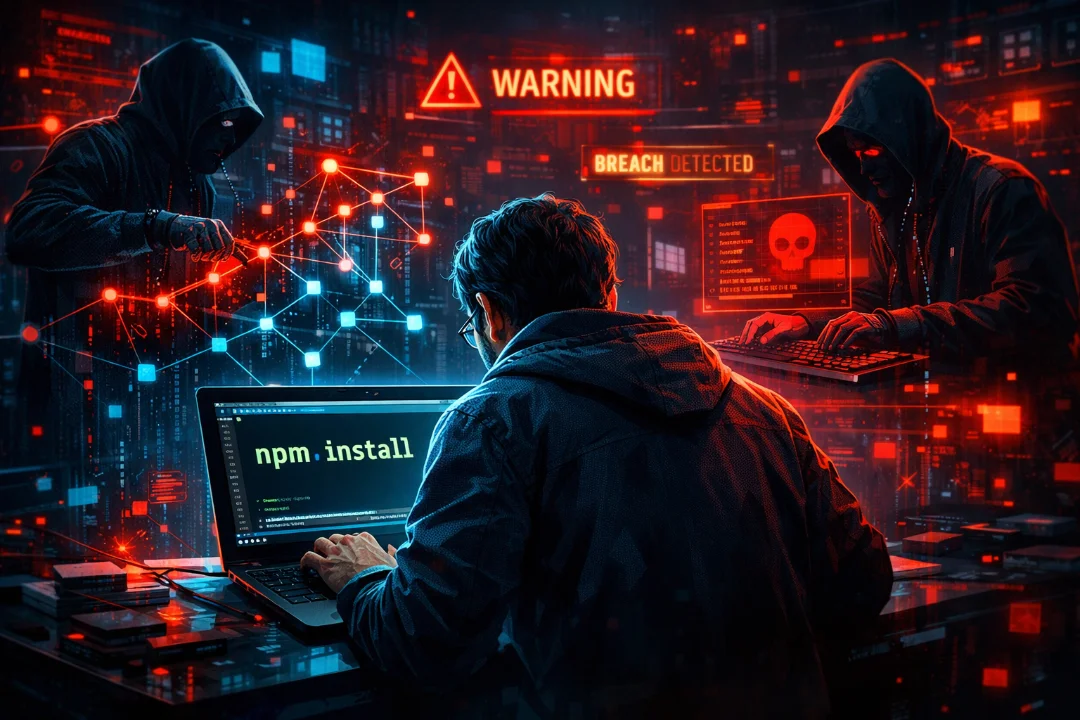
npm install Can Hack You? Shocking Axios Supply Chain Attack Explained
A simple npm install might be all it takes to expose your system to a serious cyberattack. This deep dive into the Axios supply chain breach reveals how attackers exploit open-source trust, inject malicious code, and compromise thousands of developers silently. Learn what really happened, why it matters, and how you can protect your projects from similar threats.
The Hidden Danger of npm install: A Deep Dive into the Axios Supply Chain Attack
In the fast-paced world of modern software development, developers rely heavily on package managers like npm to accelerate their workflows. A single command — npm install — can pull in hundreds of dependencies within seconds. It feels efficient, seamless, and powerful.
But what if that very command becomes the gateway to a cyberattack?
A shocking reality has emerged in recent times: you might be hacked just by running npm install. While it sounds dramatic, this is not a hypothetical threat. It is a real-world scenario rooted in a supply chain attack involving a compromised maintainer account and malicious package updates.
This article breaks down the incident, explains the underlying risks, and provides practical strategies to protect yourself.
What Happened
A recent security incident revealed how:
- A popular npm package maintainer account was compromised
- Malicious versions of the package were published
- Developers unknowingly installed infected code
- The attack spread rapidly through dependency chains
One of the highlighted cases involved Axios, a widely used HTTP client library in JavaScript.
A real supply chain attack exposed how easily malicious code can be distributed through trusted packages.
This incident highlights a critical truth: trust in open-source ecosystems can be exploited.
Understanding Supply Chain Attacks
What is a Software Supply Chain?
The software supply chain includes all components, libraries, tools, and dependencies used to build an application. Modern applications are rarely built from scratch; instead, they depend heavily on external packages.
- Open-source libraries
- Third-party APIs
- Frameworks and plugins
- Package registries like npm
This interconnected ecosystem improves productivity but also introduces significant security risks.
What is a Supply Chain Attack?
A supply chain attack occurs when attackers infiltrate a trusted component and use it to distribute malicious code to downstream users.
Rather than targeting individual developers, attackers compromise:
- Maintainer accounts
- Package registries
- Build systems
This allows them to scale attacks massively and efficiently.
The Axios Incident Explained
Step-by-Step Breakdown
- Maintainer Account Compromise
Attackers gain unauthorized access to a maintainer account. - Publishing Malicious Version
A new version of the package is released containing hidden malicious code. - Automatic Installation
Developers install the compromised version unknowingly. - Execution of Malicious Payload
The malicious code executes during installation or runtime. - Data Exfiltration
Sensitive data such as API keys, tokens, and credentials are extracted.
Why Axios Was a Critical Target
Axios is widely used across:
- Frontend frameworks like React, Vue, Angular
- Backend Node.js applications
- API and microservice architectures
This widespread adoption made it a high-impact target for attackers.
Why npm install is a Risky Command
While npm install appears simple, it performs several critical operations:
- Downloads packages from remote registries
- Executes lifecycle scripts (preinstall, install, postinstall)
- Builds a complex dependency tree
This means:
- Code execution happens automatically
- Indirect dependencies are installed without visibility
- Implicit trust is placed on maintainers
This creates a large and often invisible attack surface.
Key Security Risks
Implicit Trust in Open Source
Popularity does not equal security. Even widely used libraries can be compromised.
Transitive Dependencies
A single vulnerable dependency deep in the chain can compromise the entire project.
Lack of Verification
Most developers do not verify the integrity or authenticity of packages.
Automated Install Scripts
Malicious scripts can execute silently during installation.
Real-World Impact
Supply chain attacks have resulted in:
- Credential leaks
- Cryptocurrency theft
- Unauthorized system access
- Large-scale enterprise breaches
Since npm install is often used in CI/CD pipelines, attacks can spread rapidly across organizations.
Technical Breakdown of Attack Vectors
| Attack Vector | Description | Impact |
|---|---|---|
| Account Takeover | Compromised maintainer credentials | Unauthorized publishing |
| Dependency Injection | Malicious code added to package | Execution during install |
| Typosquatting | Fake packages with similar names | Developer confusion |
| Install Scripts | Automatic script execution | Silent compromise |
| Version Hijacking | Malicious updates pushed | Widespread infection |
Why This Problem is Growing
Modern applications often include hundreds of dependencies and thousands of indirect dependencies.
- Increased complexity
- Reduced visibility
- Difficult manual auditing
This makes the ecosystem highly vulnerable to supply chain attacks.
How Hackers Exploit Developers
Psychological Factors
- Focus on speed over security
- Trust in popular libraries
- Lack of awareness
Technical Weak Points
- No package signature verification
- Weak account security
- Blind updates
How to Protect Yourself
Use Lock Files
- package-lock.json
- yarn.lock
Enable 2FA
Always secure your maintainer accounts.
Audit Dependencies
- npm audit
- npm audit fix
Avoid Blind Updates
Review updates before applying them.
Disable Scripts When Possible
npm install --ignore-scripts
Monitor Security Advisories
- GitHub alerts
- npm advisories
Advanced Security Practices
- Use tools like Snyk and Dependabot
- Adopt a zero-trust approach
- Run installs in sandboxed environments
- Review critical dependencies manually
Lessons for Developers
Convenience without security is a vulnerability.
Modern developers must balance speed with security awareness.
The Bigger Picture
Supply chain attacks are becoming one of the most dangerous cybersecurity threats. They exploit trust, scale rapidly, and are difficult to detect.
As software ecosystems grow, so does the attack surface.
- Security must be integrated into development workflows
- Awareness must increase
- Tools must evolve
Conclusion
A simple command like npm install — something developers use daily — can become a serious security risk if not handled carefully.
The Axios supply chain incident highlights how attackers exploit trust in open-source ecosystems and how quickly vulnerabilities can spread.
Developers must adopt a security-first mindset by auditing dependencies, understanding risks, and following best practices.
In today's interconnected world, security is no longer optional — it is a fundamental responsibility.
Discussion
💬 0 comments